Michael Noll has been the writer-in-residence at the Katherine Anne Porter House and an assistant editor at Narrative Magazine. He's taught workshops with Badgerdog and American Short Fiction and also created the Magazine Writing correspondence course at Texas State University—his students have published work written for the class. Michael’s own work has been published in American Short Fiction and The Owls, and he’s appeared as a storyteller at The Story Department, sponsored by The Austin Bat Cave. He’s currently at work on a novel.
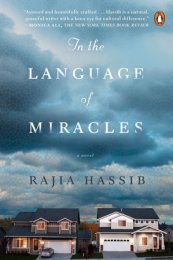
Rajia Hassib’s debut novel, In The Language of Miracles, reads as a post-September 11th metaphor for Muslim life in America. It is the story of an Egyptian American family, the Al-Menshawys, dealing with the aftermath of a murder, committed by their eldest son, Hossam, of their neighbor’s daughter and his onetime girlfriend, Natalie Bradstreet.
Set in the fictional northern New Jersey town of Summerset (not to be confused with the actual Somerset, New Jersey) in the run-up to the one year anniversary of the crime and a memorial service for Natalie, the novel weaves between the perspectives of Hossam’s parents, internist Samir and homemaker Nagla, younger siblings, Khaled and Fatima, and maternal grandmother Ehsan as they live under suspicion and scorn. Against his family’s wishes, Samir decides to address the town at Natalie’s memorial in an attempt to reintegrate the Al-Menshawys into the community in which they’ve lived for nearly three decades. His attempt goes predictably poorly.
Hassib’s narrative strategy is a smart one. She sets the novel in the days before the memorial, which allows the characters to reflect on the murder—a metaphor for the September 11th attacks—without having to dissect the motives for Hossam’s actions. (He appears only in flashbacks and recollections.) In doing so, she allows Hossam’s motives, which are only alluded to as being the result of mental illness, not to matter. After all, the rest of the Al-Menshawy family had nothing to do with the crime but are still entrapped by its implications. Through this strategy, Hassib personalizes the confusion, hand-wringing, and uncertainty that many American Muslims have felt in the decade and a half since the attacks. We did not commit the crime, but the burden is still both felt by us and forced upon us.
To be Muslim in America is to live under suspicion. But it wasn’t always this way. In prelapsarian times, for me being a Muslim male was never a problem itself. Few in the Midwestern American town in which I grew up could identify a Muslim, and I even recall being thanked by an elderly veteran for my co-religionists’ anti-Russian fervor in Afghanistan when I worked for a summer at the VA Hospital in Kansas City in the mid-1990s. Now, of course, everyone can identify a Muslim, even if that Muslim is actually Sikh, and Russia is not our enemy but our puppet master.
By September, 2001, however, I had moved to lower Manhattan and had just entered graduate school. Despite its reputation for being a diverse, tolerant metropolis, suspicion found me in New York. In the weeks after the attack, subway riders muttered insults, firefighters threatened to “smear my brains across the pavement,” the NYPD and FBI searched my apartment, and when I flew home for Thanksgiving, an Upper Eastside grey hair tried her damnedest to eavesdrop on my phone call. She was visibly upset when I wasn’t (for once) selected for enhanced screening.
The question then for American Muslims is that if you can accept a compliment for the perceived accomplishments of your perceived co-religionists, as I had with the veteran, then should you harbor guilt or responsibility for their ill-deeds as well? If all Muslims were good when some fought Communists, then are we all bad when some commit terrorism?
This is, of course, an absurd question, especially when considering the heterodox nature of Islamic cultures and practices across the world and the multifaceted geopolitical nature of terrorism and the war on terror. (See also Syria).
Nevertheless, guilt-by-association haunts American Muslims a decade and a half removed from 2001. Or as Hassib’s Khaled admits to a New York City barista, Brittany, who he’s befriended over their love for Lepidoptera: “They see me, they think of [Hossam]. They think of him, they think murder…. And the worst part is—I can’t shake him off. I can’t drive him away….”
You may think that this metaphorical setup would render the Al-Menshawys as archetypes, but Hassib’s novel succeeds through the richness and detail of her writing, which documents the dynamics of an inter-generational Egyptian immigrant family under one, suburban roof. The grandmother, Ehsan, anchors them to tradition, lighting incense, reciting the Quran, and baking scores of fetir el-rahmah or pastries of mercy, even as the elder Al-Menshawys eschew tradition. Ehsan’s daughter, Nagla, for example, smokes prodigiously, hates attending Friday prayers at the mosque, and doesn’t wear a headscarf. Replace grandmother with elderly aunt and fetir el-rahmah for samosas, and you essentially have my Indian Muslim American household.
The Al-Menshawy patriarch, physician Samir, is a particularly good example of how the September 11th attacks came to implicate all American Muslims. Thanks in part to the Hart–Celler Act, many skilled immigrants arrived to the U.S. in the 1970s, leveraging their education in order to create a better life for their families, as the cliché about this country goes. Many of those immigrants, like my own parents, established themselves in their communities as professionals, occasionally as doctors, despite facing racist attitudes, often from other physicians.
These immigrants reasonably thought that their vocations would earn them enduring trust, building on the stereotype of American, melting-pot meritocracy. Occasionally, this was the case. But for many American Muslims, the terrorist attacks of 2001 upended those perceptions, and they found themselves outsiders in the very communities that they had helped for decades heal.
This is where Hassib’s Samir finds himself after Hossam’s crime. Samir cannot fathom why the community turned so viciously against the Al-Menshawys: His practice suffered; his house was graffitied; and his family shunned. Undoubtedly, any family whose son commits a horrific crime would be vilified, but when the perpetrator is Muslim the implications and suspicion resonate further, capitalized on by both a political party hell-bent on finding boogeymen and a compliant and profit-starved media establishment. Dylann Roof, for example, not only did not impugn white supremacists, but his assassinations had such little impact on American thinking that a year later the nation elected a racist demagogue to its highest office.
Hassib’s Samir believes that he can change the ‘hearts-and-minds’ of Summerset residents through direct action, through a direct appeal by using Natalie’s memorial to “show that we are on the same side they are on. That we regret what happened as much as they do…. That we are not what they think we are.”
But American Muslims are no longer in that era, if it were ever possible. In fact, it has been long enough since 2001 that a younger generation of American Muslims has emerged from childhood to find themselves trapped in an increasingly hostile political climate, burdened with a crime that they have no connection to.
In a sense now, we are all Khaled, Hossam’s younger brother, who feels these implications the worst. As Hassib writes, “A year ago, his brother had pulled a trigger and unleashed a hurricane that had been pummeling Khaled ever since, snatching him off his feet and tossing him in the air, twirling and twisting him about, watching him grope for an elusive ground.” This is as apt a metaphor for Muslim life in American post September 11th as I’ve read. #WeAreAllKhaled
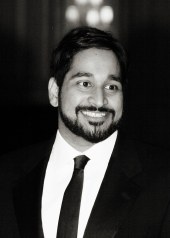
Farooq Ahmed, now a Los Angeles-based writer, has a B.Sc. in Biochemistry from Brown University and a M.F.A. in fiction from Columbia University. He is completing a novel set in Kansas, where he was raised, and a screenplay featuring sasquatch, although he has never met one. His work has appeared in the Financial Times, Nature, and the Proceedings of the National Academy of Sciences. Occasionally, he can be found online: @mcfruke
Rajia Hassib was born and raised in Alexandria, Egypt, and moved to the U.S. at age twenty-three. She earned a degree in architecture from the University of Alexandria and a second bachelor’s and a master’s in English from Marshall University, where she went on to teach creative writing and postcolonial literature. She lives in Charleston, WV, with her husband and two children. In the Language of Miracles is her first novel.
In the Language of Miracles is the story of the Al-Mehshawys, a Muslim family from Egypt. Nagla and Samir immigrate to New York in 1985, with their infant son Hosaaam, and Samir finds success as a physician in the suburbs of New Jersey, where the family has two more children, Khaled and Fatima. When Hosaam murders his girlfriend, Natalie, and takes his own life, the family members become outcasts in their community. In the Language of Miracles is a novel about individuals dealing with loss, grief, and shame in the aftermath of violence.
Selin Gökcesu
I read in previous interviews that you were moved by the events surrounding 9/11 in designing the plot and having the novel unfold around an act of violence. But, the act of violence in the book is very specific, and in some ways, very stereotypical: a young man kills his girlfriend and commits suicide. Can you tell us more about this choice, about its relationship to political violence at a larger scale, and its personal impact on the characters?
Rajia Hassib
While the aftermath of 9/11 was, indeed, the main reason I built the plot around an act of violence, I was never interested in a direct exploration of the political aspects of that particular terrorist attack. Instead, I wanted to explore how this one event shaped the lives of so many who were neither involved in it nor in any way responsible for it. As a Muslim living in the United States since before 9/11, I saw firsthand how this terrorist attack rattled the entire Muslim community in so many ways, and I wanted to investigate this on its most basic, human level.
So I chose to build the novel around a straightforward act of violence that cannot be construed as politically or ideologically motivated. I felt this choice would free me to explore the impact of such violence on the survivors on a more intimate level because my characters would not have to deal with political implications directly. Having said that, I also knew that politics would unquestionably loom in the background—one of the themes the novel is exploring is why any crime committed by a Muslim seems to taint the entire religion, which, in a way, is one of the direct results of 9/11. So choosing a simple and specific act of violence allowed me to explore the politics of how culture views violence committed by Muslims, even if this violence is not politically motivated. This has always fascinated me, partly because it is my personal belief that political violence in general, when viewed in relation to the actual human beings who commit it, can always be traced to some sort of personal motivation. Research into the minds of terrorists has shown how past personal experiences play a role in radicalizing individuals, in turning them into people ready to perform acts of unspeakable cruelty. So my belief is that violence is always personal and intimate, and that’s how I chose to represent it in my novel.
Selin Gökcesu
My reading of Hosaam was as a somewhat ambiguous character at first. He became a villain once it was revealed that he tried to set his brother up. This was partly because we weren’t exposed to his inner world and mental state enough to sympathize with him. What was behind the decision to keep Hosaam a black box and a somewhat unsympathetic character?
I intentionally kept Hosaam an ambiguous and unsympathetic character, and I did so for two reasons. The first was my determination to keep this novel about Hosaam’s family, not about him. In what I know is a cruel judgement on my part, I felt that Hosaam’s decision to take his own life silenced his voice, that he, in a way, lost the privilege of representation when he chose to commit a violent act and leave his family to deal with the aftermath. I felt more sympathy with them than I did with him, perhaps because his choices turned their worlds upside down. I will admit that part of this stance is rooted in how I, as a Muslim, feel toward terrorists who commit acts of violence and get killed themselves. I always wonder how the terrorist’s mother feels, for example, or how his siblings can go on with their daily lives. In addition to the pain of knowing that a loved person did something so cruel, the family is left with the added pain of never knowing why he did it.
Which brings me to the second reason I chose to refrain from exploring Hosaam’s inner world: his family would never have access to that. They will never know exactly what led him to act the way he did, and I wanted the reader to share in their puzzlement, knowing fully well that it is a frustrating exercise and that many readers will be left unsatisfied. In my mind, however, this frustration can and should bring the readers closer to the experience of Hosaam’s family, who, after all, are the protagonists of this novel.
Selin Gökcesu
We see Hosaam alive in two scenes. His second appearance, halfway through the book, is especially startling and eerie. What did you want the readers to know about him through these scenes? What was the reasoning behind the timing of Hosaam’s appearances?
Rajia Hassib
Structurally, the novel is told from the points of view of three characters—Hosaam’s parents and his brother—and I felt I needed to allow these three voices time to develop and get established before I ventured into whatever limited access I was going to grant them into Hosaam’s life. I wanted to make it clear that my interest lay in the lives of Khaled, Nagla, and Samir—not in Hosaam’s life. So the timing was partly dictated by the pace of the novel as it was designed to focus on the three narrators. As I was developing their characters, I also reasoned that the more readers became interested in my narrators, the more they will want to learn about Hosaam, which meant that holding off on satisfying their curiosity—however limited this satisfaction was going to be—should make for a more engaging and intense reading experience. Once it was time to present Hosaam in the limited scenes I included, I hoped that readers would see him as a troubled young man, one who is showing signs of mental illness just clear enough to appear as such in hindsight but subtle enough to excuse his family for not noticing them earlier.
Apart from all of that, I will admit to one playful motive on my part: I hoped that delaying Hosaam’s scenes would give readers time to make presumptions about his motives and then test those presumptions against the explanation I end up offering. I felt that some readers may jump to the conclusion that Hosaam’s violence was religiously motivated—as many people do with all crimes committed by Muslims—and that delaying the revelation that he was, perhaps, a victim of mental illness, not religious extremism, may induce those readers to question the reasons they rushed toward such a conclusion to start with.
Selin Gökcesu
Throughout the novel, all the central characters change drastically except for Nagla’s mother Ehsan, who came from Egypt to stay with the family after Hosaam’s death. Could you tell us a little more about how you shaped her as a character, whether she was based on a particular person or perhaps a prototypical grandmother? What about her rendered her so impervious to change, even following a traumatic event in the family?
Rajia Hassib
Ehsan is definitely a prototypical grandmother. She is not based on any one particular person, but is rather a collage of many women I knew growing up in Egypt. The older I got, the more I appreciated the resilience of many of those women, who never seemed to realize how vital their solid dependability was for their families, how cherished their unquestioning love. I wanted Ehsan to embody the simple, generous qualities of all these women who internalized the roles their society dictated on them—mother, wife, nurturer—and who performed these roles with willingness and without questioning. These same qualities—the acceptance of the status quo, the inability to question society’s conditioning—are the ones that make Ehsan so impervious to change.
She hangs on to her religious belief, her place in society, her role in her family, and she is both too kind and too scared to challenge any of that. Her religious belief in particular is crucial here, since it would induce her to accept any traumatic event as God’s will, and, by extension, would characterize any questioning of God’s will as blasphemous. Interestingly, such simple attitudes towards traumatic events make it easier for her to cope than it is for anyone else in her family. So she remains unchanged.
Selin Gökcesu
In the novel, we meet several Muslim women—Ehsan, Nagla, Nagla’s friend Ameena, and Fatima—who are all very different from each other. I felt that Ameena especially challenged the simplistic Western stereotype of a Muslim woman. Can you tell us a little about how these characters came about? I was especially curious about which aspects of them were intentional from the start and which emerged as you wrote.
Rajia Hassib
Of the four women, Ehsan and Fatima were the ones clearest in my mind when I started the novel. Ehsan was to be the typical Egyptian grandmother, generous and loving, and Fatima was to be fairly religious—a reflection of a quality I see in many young Muslim women and which I think is not the expected stereotype. Ameena was not as clear a character when I started; her character did develop as I went along, but it developed naturally because she, too, represents many women I have come across in my life, despite how different she is from the Western stereotype. Of the four women, though, Nagla was the most difficult for me to get to know. In fact, I went through a revision of the novel where I literally rewrote every single chapter told from Nagla’s point of view after the novel was supposedly finished, just because I was not satisfied with the way I originally portrayed her. I had seen her as a grieving mother and little else, but, as I wrote her chapters, she started to emerge as a character with deeper troubles, a woman with a capacity for self-examination that ran much deeper than I had expected or intended, and I wanted to rewrite her chapters to give her the room to develop and emerge as the character I knew she was. Having said that, I did not set about intentionally trying to make the four women different; I just tried to develop them in the way I felt was the most honest both to their personalities and to the novel’s progress.
Selin Gökcesu
As a family, each of the Al-Menshawys is somewhat alienated from their greater community and the American culture. Although she is far more foreign, Ehsan is able to relate with Americans at a very human level, as exemplified by the graveyard scene. Can you tell us more about why that is?
Rajia Hassib
Ehsan’s absolute foreignness is the very reason she can so easily connect with Americans. Because she has no desire to fit in the American culture, she feels no pressure to conform and no embarrassment because of her difference. The Al-Menshawys want to be American, and arguably identify more as Americans than as Egyptians, and they are therefore more sensitive to their perceived differences. Freed from the pressure of self-consciousness, Ehsan is able to see the similarities between her and Americans, rather than focus on the differences. This allows her to connect with others on the very basic level of their shared humanity. It also helps that she is a genuinely kind and loving person and, as such, is quite sensitive to the feelings of others and immediately motivated to try to make them feel better.
Selin Gökcesu
With each chapter, the point-of-view changes. We see the events through the eyes of Khaled, Nagla, and Samir, but never through Fatima’s perspective. Why not?
Rajia Hassib
Thematically, I felt any contribution Fatima’s point of view would have to offer can easily be included in Khaled’s chapters, but that the opposite was not true. For while Khaled can explore the struggles of being the surviving sibling of a murderer, he has the added burden of being male and, therefore, of having to deal with the potential fear his community may feel toward him—he is the one who can arguably end up repeating his brother’s crime. I therefore felt his character had more to offer simply because he had more at stake. In addition, Fatima’s religiousness seemed to offer her a degree of peace. Between that and her young age, I felt she was not as conflicted as her parents or her brother had to be. She would have still made a fascinating character to explore, but I did not feel her character’s arc was necessary to the plot.
Selin Gökcesu
I have always had my own fascination with Arabic, which has some similarity to Khaled’s fascination with it. Although I don’t speak it, it has always been associated with divinity and holiness. In the book, we are exposed to Arabic through Khaled’s musings. Why is Arabic the language of miracles from Khaled’s perspective? Why is it the language of miracles from your perspective?
Rajia Hassib
From Khaled’s perspective, Arabic is the language his grandmother speaks when she prays for his health and his prosperity. It is the language of the Qur’an, which she reads in the hope of infusing protection upon him and his family, the language of prayer and, by extension, of the magic that is inherent in prayer, the belief in a God who can perform miracles. From Khaled’s perspective, Arabic is the language of miracles because the Egyptian part of his hyphenated identity associates the expectation of miracles with his Islamic faith as presented by his grandmother. When he prays for a miracle, he prays in Arabic. Here I hasten to note that, as I wrote this novel, I came to the realization that all prayer is, in some way or another, a language of miracles, that faith itself is the same, and that this applies to all people of all beliefs. So the miracle gained a larger scope, for me, and, interestingly, moved me to delete from the novel a direct reference I had to Arabic as the language of miracles, simply because I didn’t want to make this kind of connection between humans and their Gods exclusive to Muslims.
My perspective is a tad more cynical. I still view Arabic as a language of miracles, but I’m forever irked by how some people of my faith and background often rely too heavily on God, praying and waiting for Him to fix their problems without actively and earnestly trying to fix them themselves. I see this quite often, both on personal and on larger, political levels. In a way, the reliance on God that all faiths request can sometimes be transformed into a passive dependence that makes complacency possible. So the language of miracles becomes the vehicle of expecting miracles to happen, and, in the process, just waiting for them and neglecting our responsibility to act. So my subtle criticism of my own culture lay in exploring how often we fall on this sort of complacency, expecting God’s help just because we deem ourselves worthy of it.
Selin Gökcesu
Many of the chapters open with an English saying or quote and its Arabic equivalent, but a few of them open only with an Arabic word. What do these equivalencies (or lack thereof) reveal about the two cultures?
Rajia Hassib
I hope that they can reveal the subtleties of our similarities and differences. The chapters that open with both English and Arabic quotes often show that we are, indeed, quite similar, although they as often reveal how different cultures can interpret the same thing differently. For example, the first quote compares the Biblical “The Lord gave, and the Lord hath taken away” to the Arabic saying “God gave; God took; God will provide compensation.” While both sayings are quite similar in revealing how both cultures attribute life and death to God, how they both acknowledge His right to take back that which He has given, I find the Arabic addition of “God will provide compensation” fascinating. One might argue that this addition implies that suffering is acceptable only as far as one can be rewarded for it. Such subtle differences can be quite telling, when applied to the differences in cultural attitudes toward various events.
The chapters that start with only an Arabic word can be equally revealing, if only by highlighting what the omission says about American culture. The very existence of the word Meadeddah—Arabic for a professional mourner—and the lack of an English equivalent, tells a lot about how the differences in the grieving process. The notion of a woman hired specifically to wail aloud during funeral services would be perceived, in America, as comical, ridiculous, or scandalous, whereas in some of the poorer parts in Egypt it is quite proper to display grief in such obvious, loud ways. Such differences offer food for thought. I hoped that including these various sayings will give readers something to contemplate.
Selin Gökcesu
At a more practical level, I was intrigued by the process of collecting these sayings and quotes—did you get help? Was it an ongoing process? Did the chapters come first or the quotes?
Rajia Hassib
The chapters always came first. I did not start including the quotes until I was on the third draft of this novel, and I started thinking that Ehsan would certainly respond to these chapters through some of the Arabic sayings and quotes—which is a quite typical reaction of an elderly Egyptian woman. But I could not have her do so, simply because she was not in every chapter. Moreover, almost every time I thought of an Egyptian saying, an English equivalent would immediately present itself, and those similarities intrigued me so much that I felt I had to share them with the readers. I did not need help to collect the sayings—I grew up in Egypt, where I was exposed to all of these idioms. Even the English ones came to me right away. The research I did was to find out the origins of the sayings, to determine which ones were religious, for example, and which ones simply traditional. Interestingly, I found that I had assumed some of the Arabic sayings were religious, when they were not, and vice versa. So it turned out to be an educational process for me, as well.
Selin Gökcesu
To me, the overarching themes from the novel were grief and the human desire to control one’s own fate. Can you tell us more about the cultural differences surrounding these themes and how these differences affected the characters and the plot?
Rajia Hassib
These two themes are certainly at the heart of the novel, and the cultural differences between them were crucial in developing the characters. While grief is universal, the human desire to control one’s fate affects how we grieve, and the notion of control is vastly different in different cultures. For one thing, Islam is built on a surrender of one’s control to God. So at the core of the religion is the acknowledgement that one, in fact, has very little control on life’s events, which does not mean that one has no will, but simply implies that one can control only how one can react to events, not whether or not these events happen in the first place. In a way, this can make grieving easier—people tend to accept the event itself as God’s will and can then focus on healing. In contrast, Western culture assumes a much larger degree of control. Here the assumption is that one can not only control one’s fate, but that any undesirable event could have been prevented. This makes for a higher level of accountability, which is a good thing, but it also complicates grieving, because it layers it with regret. Of course I present these differences in an overly simplistic manner—these attitudes are much more nuanced, in reality—but I think the core of my assumptions about cultural differences here has at least a degree of truth.
This brings us back to the earlier question about Ehsan and her steadfastness. As the only purely Egyptian character, she has a simplistic view of fate that assumes very little control on her part. All is God’s will, and, as a good Muslim, she accepts that. Khaled, who falls at the other end of the spectrum, culturally—more American than Egyptian—has to struggle with his grief partly because he is forced to examine these very attitudes and to determine how much of his own control he is willing to relinquish, if any. On the same token, Samir, a Muslim by birth who does not seem to give religion any thought, seems so determined to retain control that he is unable to recognize the futility of some of his actions. And Nagla, who is a mother first and foremost, has to struggle with the Islamic prohibition of asking “What if?” and thereby inviting regret, because, of course, she cannot help but ask. Because this is a character-driven narrative, these themes and the cultural differences surrounding them have, in fact, dictated the plot as well as determined who the characters ended up being.
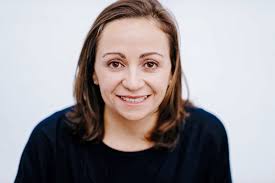
Selin Gökcesu is a Brooklyn-based writer with a Ph.D. in Psychology from Indiana University and an M.F.A. in Nonfiction from Columbia University. Her work has appeared in Electric Literature, Guernica, the Tin House blog, Asymptote Journal’s Translation Tuesdays, and The Rumpus.
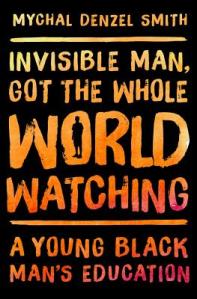
Mychal Denzel Smith’s Invisible Man, Got the Whole World Watching is a powerful memoir where Smith answers the question, “How did you learn to be a black man?” As he reflects upon his life, he offers key insights about the impact family and friends had on his development, as well as a number of public figures—a combination of activists, authors, musicians, comedians, and athletes, ranging from Malcolm X, James Baldwin and Toni Morrison to Dave Chappelle, Frank Ocean, and LeBron James —who also shaped his understanding of what it means to be a black man. Along the way, Smith plants gems signifying the urgent call for the humanity of black people—women, men, gay, trans-, straight—to be seen and no longer dismissed and discarded.
Smith’s personal story weaves in and out of events affecting the black community at-large, like the case of the Jena Six, the multitude of unarmed black women and men murdered by police, and the election of President Obama. In doing so, he reveals not only how his own understanding of being a black man was impacted but also exposes the collective impact that white supremacy, patriarchy, homophobia, and transphobia have on the black community. Smith covers a number of other concepts including: the role of respectability politics, the privileges of being a member of a dominant group, why black rage is essential, the responsibility of celebrities to speak out against injustice, the necessity of understanding Black womanhood, invisibility in the white mind, homophobia and the concept of “inviting in” versus “coming out,” and mental health and the idea of “living with” as opposed to “suffering from” a mental illness.
Much of what Smith speaks of is compelling and opens the door for rich dialogue. Truly, one could devote several pages to each of the topics above, but for now, I will focus this reflection on how Smith became a writer and his understanding of what it means to be a black writer.
Honest Man; Good Writer
Smith found his voice while working as a writer for the Hampton Script, the campus newspaper at Hampton University. He said he could be what James Baldwin called “an honest man and a good writer” and do so “in service of my people.” In response to a former business advisor of the Script who told him he couldn’t be a good journalist because he was an activist, Smith states, “If being an activist meant that I was approaching my work not as an observer but as an advocate, not as a curious outsider but as an active participant in struggle, then so be it. Honest and good. For my people. For Trayvon.”
These two quotes made me stop to think about integrity, being a good writer, and service, and how ultimately all three are intertwined. That the writing isn’t good writing unless it’s honest and it’s in service to others.
Regarding the latter quote, as Smith tells the story, he admits that it was unclear whether or not the advisor’s words were intended to be an insult. Nonetheless, without identifying as an activist (seeming aware of the multiple interpretations of the term), he defines it as being an “advocate” and “active participant in struggle.”
This initially reminded me of many of my colleagues and friends. Some of them self-identify as activists, and others do not. The work of both explicitly serve and advocate for justice…justice for various communities who, despite their cultural and social capital, are routinely marginalized and underrepresented and/or their images and narratives are distorted or rendered nonexistent. His words also prompted me to think of the broad spectrum of activism which includes writers; when writers write and advocate for justice, they shouldn’t be immediately dismissed as an “armchair revolutionary” (although this can sometimes be the case). Such a writer has the potential to inspire, bring healing, transform lives, ignite and sustain movements, and therefore, undeniably be an “active participant in struggle,” serving their community.
With respect to my personal experience of service and being a writer, everything begins with honesty. I have always taken great pride in my self-integrity. Being honest with myself and with others is vital. Otherwise, I find myself either feeling sick or heavy, stuttering and stumbling through my days.
As a writer, I spend a considerable amount of time checking myself, making sure my writing is real…making sure it comes from an authentic place. I do this by regularly asking myself, “Is this true for me? Do I really believe this? Am I willing to take this risk telling this truth?” After years of this practice, I don’t always have to ask anymore; there is an internal gauge that tells me the answer, and I feel the yes or the no. If I discover the answer is no, then I need to dig deeper or stop writing. Because if I’m not being completely honest, what’s the point of writing? What’s the point of creating art if it doesn’t reveal my heart and leave behind a piece of my heart to create a space for others to feel, be connected, and create something life-giving of their own that helps others to feel and be connected. Honesty clears the way for service to actually happen…and truly be genuine and selfless.
Being a Black Writer
Shortly after he reflects on Baldwin’s words, Smith talks about the honesty of a black writer and says, “To be a writer is to bear witness; to be a black writer is to bear witness to tragedy. In order to be honest and good, this is something I can’t escape.”
Indeed, being writers, we are witnesses and record what we witness. And indeed, one of the deeply unfortunate realities of black life in the United States is how often it is interrupted by wholesale tragedy. However, I must add that being black isn’t defined by tragedy. Being a black writer isn’t defined by the tragedy witnessed. It certainly cannot be ignored; it’s something we can never run from, that’s for sure. However, I find that allowing tragedy, in and of itself, to be that distinguishing characteristic, marking the difference between “writer” and “black writer,” is dangerous and perpetually unhealthy. It flirts too much with things akin to deficit models in education or scarcity or deprivation mentalities; the latter is especially all too common among those who confuse the struggle with their identity or believe that communities of color are destined to struggle, considering it even virtuous.
I believe what distinguishes “black writer” from “writer” is resiliency: the strength and beauty we develop as we work through and beyond tragedies we never chose. I think this will put us in the frame of mind to think about the cultural and social capital we possess as individuals and as a community. What does this capital look like? How does this country benefit from and rely on these assets born daily against a backdrop of tragedy? How can this capital be used to directly serve and benefit our own communities?
Perhaps, this concept of resiliency as defining factor isn’t entirely in conflict with what Smith ultimately advocates for in terms of mental wellness, especially when looking at statements toward the end of the book like, “In the rush to lock everyone away, the political class never stops to ask what kind of mental health care a community that deals with violence daily may need.”
If we want to ensure the emotional well-being of black people, part of that task must begin with changing our language and interrupting the thoughts that tempt us into believing that tragedy and death is all that awaits us. Doing this when our lives are constantly under attack seems virtually impossible…but our survival and our prosperity depend on it.
We must prepare our minds to be ready to recognize, accept, and create abundance, what Mario Martinez, a clinical neuropsychologist who developed the theory of biocognition, defines as the “the amount of health, wealth, and love that you require in order to lead a joyful life…a wellness life” (Mario Martinez, The Mind-Body Code: How the Mind Wounds and Heals the Body). When abundance arrives, we need to be in a position to welcome it and embrace it.
If one has lived a life of deprivation (i.e. gone without food, love, safety, or financial stability, struggle to have one’s dignity affirmed, rendered invisible by systems of oppression, experienced multiple deaths of loved ones, and/or the intersections thereof), there is a way in which the body and mind grow accustomed to this. Martinez argues that deprivation can be internalized by the immune, nervous, and endocrine system. In such a case, when abundance or joy enters our lives, our body then develops a stress response to it because it’s foreign and we can become sick or engage in self-sabotage, ultimately rejecting the very thing that we claimed to seek.
Integrating abundance into our lives will require a change in the cognitive frames that have limited and distorted our ways of thinking about our own worthiness, self-care, influence on others, and proclivity for success. It can strengthen our emotional and spiritual well-being. This shift in consciousness may include the guidance of mental health professionals, indigenous healers, and support groups; it can also include a combination of practices, such as meditation, prayer, affirmations, mental rehearsal (or visualization), and gratitude exercises. A mental and spiritual wellness regimen consisting of the above will not only help us recognize and fully enjoy abundance when it comes, but also hold onto it long enough to break the cycle of transgenerational trauma so abundance (in terms of health, wealth and love) is what we pass onto future generations.
All this in a word. Replacing “tragedy” with “resiliency.” The implications stretch far beyond what we bear witness to as black writers. It also becomes about how we can view our lives and our future as black people.
Conclusion
Through Invisible Man, Got the Whole World Watching, Smith shares all that he learned from “the most meaningful people and events” in his life in order to draw a “sketch of the black man” he’s become. It’s a comprehensive look at the multiple forces that have shaped him, including how the words of James Baldwin shaped his view of being an “honest man and a good writer.”
Through Smith’s vulnerability, we are able to see what he is touched and transformed by. He creates the space for readers to ponder all the themes he explores. This work prompted me to articulate my own integrity as a black writer and what it means to serve and bring healing to our community. Anyone who reads this brilliant text can expect to be inspired to think and moved to act.
Janet Stickmon is an educator, author, and performer. Professor Stickmon is the founder of Broken Shackle Developmental Training and the Black Leaders and Mentorship Program. Stickmon’s Crushing Soft Rubies—A Memoir and Midnight Peaches, Two O’clock Patience—A Collection of Essays, Poems, and Short Stories on Womanhood and the Spirit have been used in courses at several colleges and universities across the country; she is also known for her latest parenting blog series, To Black Parents Visiting Earth: A Life Guide to Raising Black Children in the 21st Century, due to be released in paperback in Fall 2017. Stickmon is currently a professor of Humanities at Napa Valley College, teaching Africana Studies and Filipina(o)-American Heritage.
Mychal Denzel Smith is the author of the memoir Invisible Man, Got the Whole World Watching: A Young Black Man’s Education.
Necessary and audacious, Mychal Denzel Smith’s assured debut fuses memoir and cultural criticism to ponder an important and too-seldom considered question: How did you learn to be a black man?
While his answers are compelling, the way he scrutinizes the origin of his beliefs about black identity and masculinity on the page is revelatory–and instructive. He mines his particular personal history as a black millennial in the age of Obama in the service of a larger vision: social transformation through personal awakening.
As he traces his own education, through family, books, music, comedians and college, he illuminates a way forward for anyone willing to grapple with their own cultural inheritance. He models a process for envisioning a new self and a new world freed from past constraints.
“Essentially, I wanted to write the book that I thought I needed when I was 17 or 18, given all that I know now.” he says. “I’m writing to the 17-year-old black boy coming up in a culture of white supremacy, but also patriarchy and homophobia and all of these other things and saying these are the questions that I’ve been challenged with over the years. Here’s a starting point for you so that you don’t get to 25 or 30 and haven’t been asked these questions.”
When you critique your culture, appraise your morals and shatter your worldview, you have a shot at growing up whole, he posits. You have a chance to create something other than the self-hatred, violence and mental illness all around us.
Though written with black boys in mind, this is a message that’s applicable to all. “I wanted it to be a book where even if you weren’t a cisgendered hetero black man like myself, you could read it and look through that intellectual process from whatever position or whatever identity markers you are experiencing it from and unpack those things for yourself,” he says.
Smith’s emphasis on questions over answers may frustrate readers seeking a cure-all for The Race Problem. But his depth and candor in exploring the making and remaking of his own identity illustrate an important first step: To fight a system of oppression you must understand how pervasive it is and how you are complicit in it.
Reading and writing are unparalleled tools in this pursuit. In the book, Smith recounts an episode in the second grade when he struggled through “The Autobiography of Malcolm X” to produce a class presentation that alarmed his classmates and prompted the teacher to cut him short. Years later, he’s still at it–reading, thinking, questioning, creating. “In the process of writing the book, I discovered this ability to sit with ideas for a period of time to challenge one’s own assumptions, to do research, to come to understand your own ideas better, to think differently about yourself and the world around you,” he says. “I don’t think that happens quite the same way in any other space aside from writing.”
Fittingly, he’s measuring the success of this book not by sales figures, but by its influence. “I want everyone to walk away from this book and not think about my journey, but think about your own,” he says. “Then do the work of interrogating what you’ve learned and whether those are useful ideas in the context of pursuing justice and equality.”
He’s eager to see where the next generation of black boys takes the conversation, how their consciousness shifts, and what cultural product they make in turn.
Maya Payne Smart publishes book reviews and musings at MayaSmart.com and interviews authors at KirkusReviews.com.

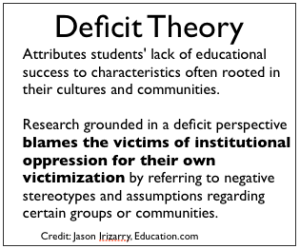 ndeed, being writers, we are witnesses and record what we witness. And indeed, one of the deeply unfortunate realities of black life in the United States is how often it is interrupted by wholesale tragedy. However, I must add that being black isn’t defined by tragedy. Being a black writer isn’t defined by the tragedy witnessed. It certainly cannot be ignored; it’s something we can never run from, that’s for sure. However, I find that allowing tragedy, in and of itself, to be that distinguishing characteristic, marking the difference between “writer” and “black writer,” is dangerous and perpetually unhealthy. It flirts too much with things akin to deficit models in education or scarcity or deprivation mentalities; the latter is especially all too common among those who confuse the struggle with their identity or believe that communities of color are destined to struggle, considering it even virtuous.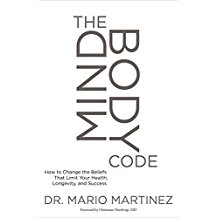
 Janet Stickmon is an educator, author, and performer. Professor Stickmon is the founder of Broken Shackle Developmental Training and the Black Leaders and Mentorship Program. Stickmon’s Crushing Soft Rubies—A Memoir and Midnight Peaches, Two O’clock Patience—A Collection of Essays, Poems, and Short Stories on Womanhood and the Spirit have been used in courses at several colleges and universities across the country; she is also known for her latest parenting blog series, To Black Parents Visiting Earth: A Life Guide to Raising Black Children in the 21st Century, due to be released in paperback in Fall 2017. Stickmon is currently a professor of Humanities at Napa Valley College, teaching Africana Studies and Filipina(o)-American Heritage.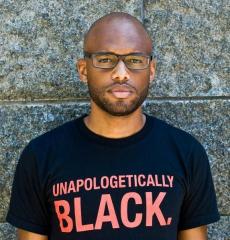
 Books Are Not A Luxury